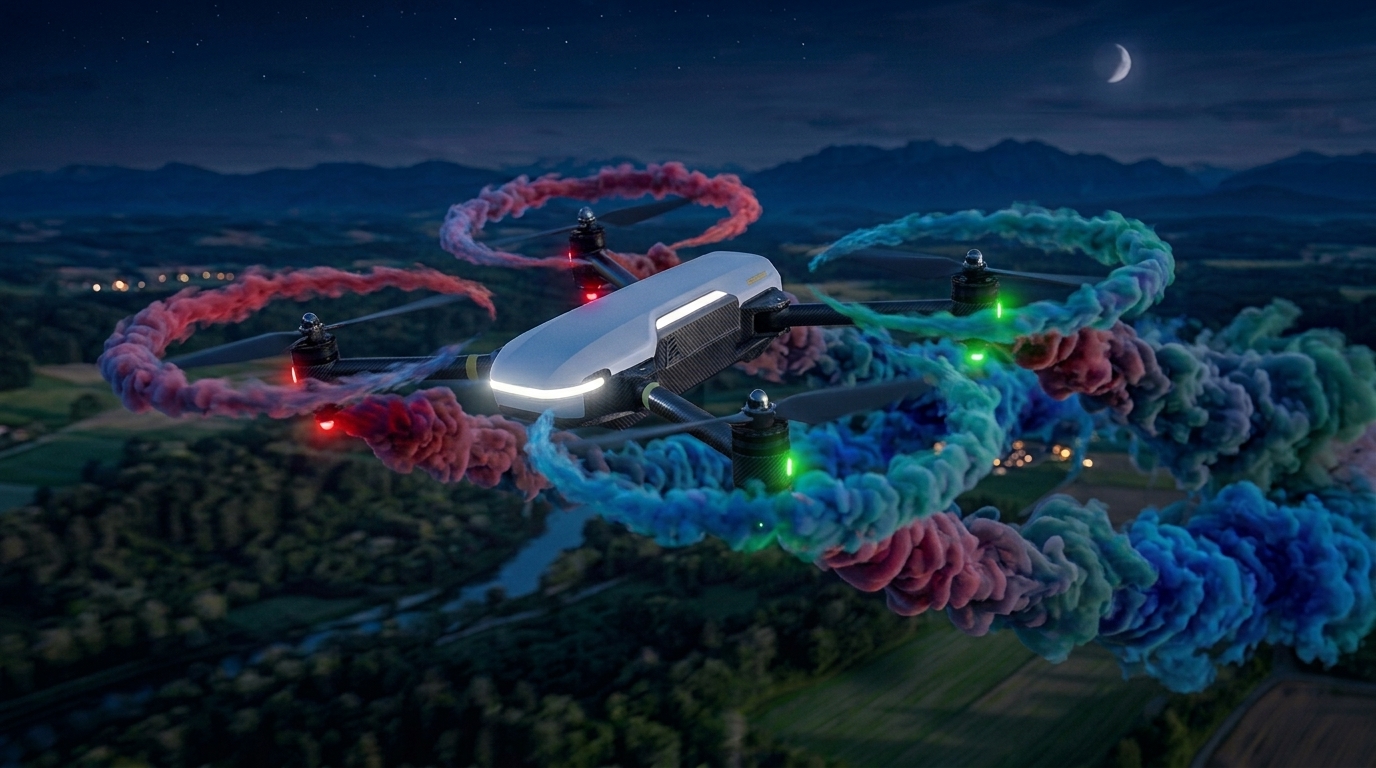

The design process does not deliver a single solution but the Pareto front of all suitable options, calculated for your flight phases, take-off mass and number of rotors.
From mission profile to validated part.
Development in three steps – each building on the previous one and each available separately.
If you already have a geometry, you can go straight to the analysis.
1D design
Design with the blade element momentum theory (BEMT) for a catalogue of verified airfoils, followed by multi-objective optimisation with a genetic algorithm. Suitable results can be selected interactively from the Pareto front, depending on your priorities.
CAD model
Complete 3D CAD model as STEP and STL including hub, shaft bore and bolt circle. Sweep and a rounded blade tip are optional and can be shaped interactively – all in the browser.
CFD and FEM analysis
Flow and structural assessment by our simulation engineers, steady or unsteady – for your selected flight states from hover to forward flight.
Simulation results directly in the browser.
The results of your CFD and FEM simulations are presented in our viewer in the browser. There you can explore the various result quantities and fields interactively. All visualisations and animations are already set up, so you can concentrate entirely on the results. No additional software is required.
Each key figure of the simulation is set against the 1D prediction. This shows not only the result itself but also how well the fast design calculation predicted the operating point.
ALL RESULTS: 1D · CFD · FEM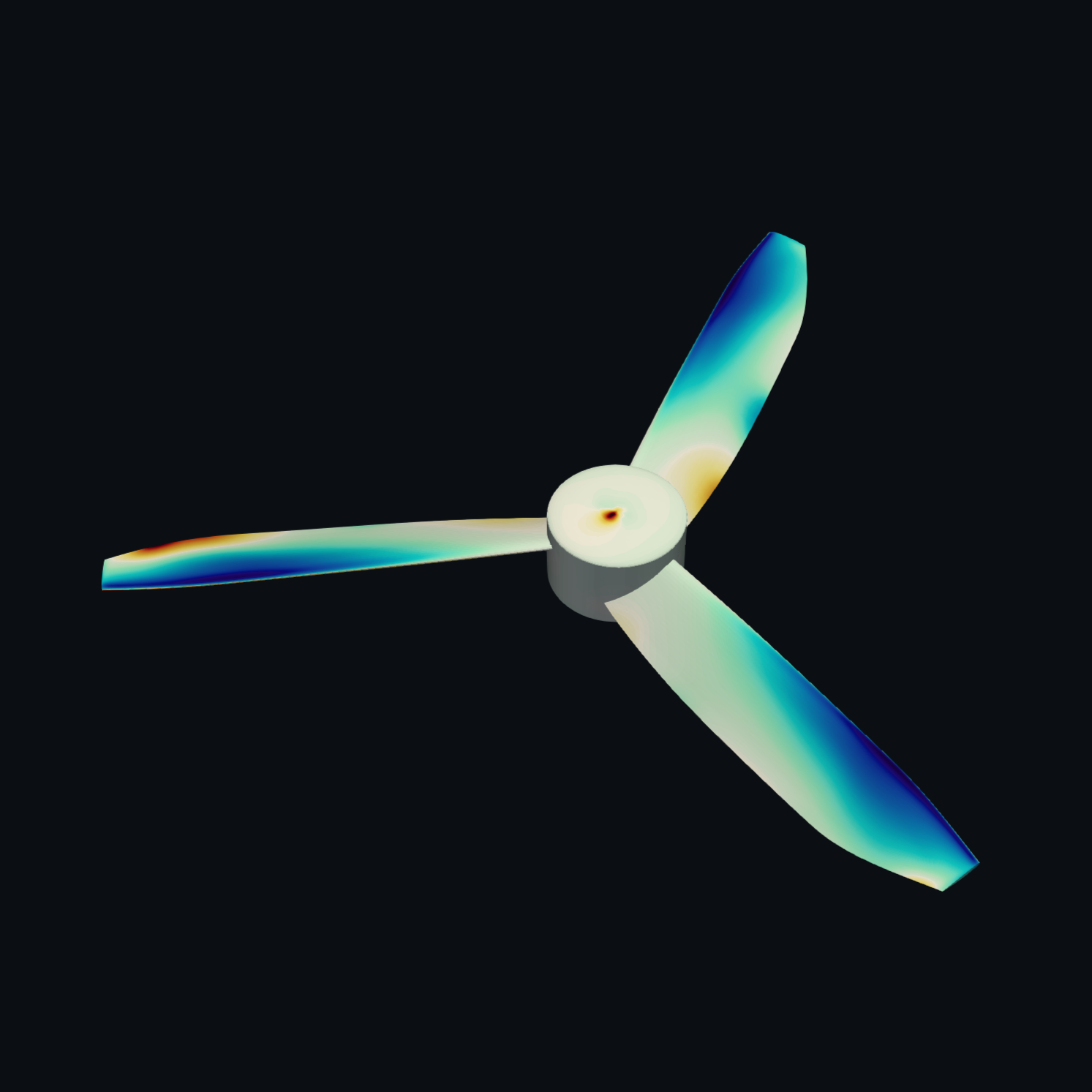
Analyse existing propellers.
If you already have a propeller geometry, simply upload it and have it analysed at the operating points you need. Our team checks every external geometry before the calculation starts.
STEP · IGES · STL · OTHER FORMATS ON REQUEST
Upload geometry →Limits of validity are clearly stated.
The 1D design is validated against public wind tunnel measurements (UIUC Propeller Data Site). For every method, from the airfoil polar to the noise estimate, the report states the limits of validity. Approximations such as the cruise estimate are marked as such.
Services
Net prices plus 19% VAT, gross prices below · projects on request
Multi-objective optimisation based on your mission, including Pareto front and design report as PDF.
STEP and STL with an engineered hub, optionally with sweep and a rounded tip.
Simulation and evaluation by our engineers, including results in the viewer and a technical report.
Strength at overspeed, natural frequencies and Campbell diagram.